
Get Your FREE Case Review
 5.0 Rating | Highly Rated & Trusted for Over 50 Years
You don’t have to face this fight alone. At Edwards & Patterson, our team brings over 50 years of experience in securing full and fair compensation for injured victims like yourself.
If an overloaded (overweight), unbalanced, poorly secured, or unsecured semi-truck/trailer contributed to the wreck in which you were injured, you may be able to recover from all individuals or entities responsible for the actions that led to the improper load. A Tulsa improperly loaded tractor-trailer accident attorney will identify those persons/entities involved with the trailer, including but not limited to the individual/company loading the trailer; the individual/entity accepting delivery of the cargo; and whether the driver/haulier was aware of an obvious hazard and chose to ignore it. Any loss resulting from the injuries sustained as a result of this crash may include: past/future medical expenses; loss of earnings; damage to your vehicle(s); and any other economic or non-economic damages. The earlier evidence regarding how the cargo was loaded is preserved, the better your ability to prove liability.
Freight traffic moving via highway, rail, and/or water in the state of Oklahoma is moved through the Tulsa Port of Catoosa. This port is identified by the Oklahoma Department of Transportation as one of the state’s most vital assets in terms of freight movement. Regardless of whether your crash occurred on I-44, I-244, U.S. Highway 412, or a local city street, the fundamental issue remains the same: did a failure in properly securing/loading the tractor-trailer cause your collision and subsequent financial losses?

Contact us today for your free & confidential case review. Our team will help you get the compensation that you deserve.
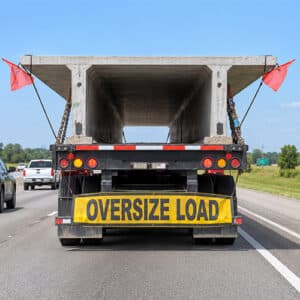 If you believe a driver of a commercial truck did not act reasonably in loading, securing, accepting for transportation, inspecting, or unloading their cargo, and this action resulted in your injury, then you could potentially file a claim. We also recommend documenting any financial loss (for example, lost wages, vehicle repairs, medical expenses) as well as any ongoing injuries resulting from the accident.
It does not matter what you think happened before you contact counsel regarding your claim. If you were involved in a collision involving a semi-truck, you may have a claim against the company responsible for loading the cargo, provided there was some causal connection to how it was loaded. Examples of common errors made by companies are listed below:
A load may appear safe as long as it is stationary; however, once the brakes are applied, the truck will shift. As heavy cargo moves towards one side of the truck, the new center of gravity for the trailer increases its propensity to roll over. The shift in cargo could either pull the trailer off track and require the driver to cross into another traffic lane, or possibly force other vehicles to take evasive action and collide with each other.
The cargo need not be left on the truck to create an accident. A loose commodity such as a pipe, a pallet, tools, building materials, or anything else that falls off the truck and strikes a moving vehicle can injure people. Additionally, fallen cargo may force drivers to brake or swerve, which causes them to collide with other vehicles, even though their own vehicle never made contact with the victim’s vehicle.
An overweight load creates momentum and increases stopping distance. Inadequate axle placement affects all aspects of a vehicle, including steering, braking, tire wear, and suspension. It is imperative that investigators determine if the load was truly overweight, or whether the same weight had been properly loaded onto the axles.
Contact us today for your free & confidential case review. Our team will help you get the compensation that you deserve.
There are federal requirements that require all commercial motor carriers (covered) to take measures that will help keep their cargo from being spilled, leaked, blown out, fallen off, or shifted. Commercial Motor Carriers have several options available to meet these requirements, such as immobilizing the cargo, using tie-downs, dunnage, blocking, and/or shoring bars, etc. Under 49 CFR 392.9, a driver should generally be satisfied that the cargo is properly secured and distributed effectively prior to driving; then, within the first 50 miles, they must inspect the cargo and securement.
Additionally, if there is a change in duty status, more than three hours of driving, or 150 miles, another inspection of the cargo securement should occur. This provision does not apply to drivers who are operating a sealed vehicle and were ordered to not open the seal, or when the cargo is loaded in a way that makes inspection impracticable. Investigation is necessary to determine which party is then liable for an unsafe load.
Oklahoma law has additional duties regarding the manner in which cargo is placed on and transported by a vehicle. Oklahoma generally prohibits the operation of a vehicle on a highway unless it is constructed or loaded to prevent the load from dropping, sifting, leaking, blowing, or otherwise escaping, and requires loads and coverings to be securely fastened, subject to statutory exceptions. Both the cargo and the material used to cover it shall be securely attached to the vehicle so they can’t come loose, separate from each other, or create hazards while being transported. Oklahoma law also limits a single axle to 20,000 lbs. and uses the federal “bridge” formula in Title 47, Section 14-109 to determine the maximum gross weight of a vehicle. As stated previously, violation of weight and/or securement standards alone will not necessarily establish civil liability. There must be a causal link established between the unsafe condition of the cargo/vehicle and the resulting injury/harm.
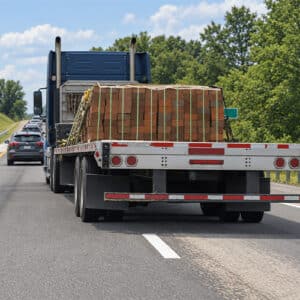 Who is liable depends upon who had control over the labor; what each individual knew about the hazardous condition; and how their negligence was a contributing factor to the collision. The investigation would be looking at:
It’s not uncommon for one carrier to point fingers at another carrier, with both carriers pointing to the “loader.” The bills of lading, the instructions for the load, and their actions will provide evidence of control over the process. If more than one person or company is found liable for damages from a hazardous condition resulting from an insecurely loaded cargo in Oklahoma, then each party should be held accountable for their share of the fault.
The cargo can be unloaded by the emergency responders and/or cleanup crew, and if a damaged tractor/trailer is taken in for repair or put back into use.
Some possible useful evidence could include:
Economic damages are monetary losses suffered by the victim. These would be all of the victim’s medical bills, cost of rehabilitation, projected long-term care (future care), lost income, lost ability to earn money, and other documented financial impacts. In addition to the previously mentioned claims regarding damages for physical property, a claim based upon property damage could also provide payment for repairing the vehicle(s) involved, either the total loss amount of the vehicle(s) if they were totaled, towing fees, storage fees, etc., as well as for the damaged personal belongings of the occupants.
Oklahoma Statute Title 23, Section 61.3 defines both economic and non-economic damages, and establishes no cap for economic damages in cases where the injury occurred on or after Sept. 1, 2025.
In addition to economic damages, which are tangible losses (e.g., money paid out for medical services), non-economic damages represent less tangible losses, such as mental distress, emotional suffering/anguish, disfigurement of the body, loss of companionship from family members/loved ones, and so forth. For bodily injuries that occurred on or after September 1st, 2025, most covered civil actions are subject to a $500,000 limit on noneconomic damages, with significant exceptions. There is no dollar limit for qualifying permanent and severe physical injuries. A maximum of $1 million can be awarded in cases that involve certain types of permanent mental injuries that severely impair a person’s ability to work or their quality of life. In addition, there will be no dollar limit (on noneconomic damages) in cases of negligence when the required findings establish by clear and convincing evidence that the defendant acted with reckless disregard for the rights of others, was grossly negligent, committed fraud, or acted intentionally or with malice.
Oklahoma’s wrongful death statute allows the personal representative to bring a qualifying claim. Recoverable losses may include medical and burial expenses, certain grief and companionship losses, the decedent’s mental pain and anguish, and financial loss to survivors. The statute generally requires the action to begin within two years.
Contact us today for your free & confidential case review. Our team will help you get the compensation that you deserve.
Title 12, Sec. 95 provides Oklahoma with a general time frame of 2 years from the date of injury for filing a personal injury negligence claim. It is imperative to understand this is a statute of limitations for filing, NOT a safe period of time to wait before investigating. In most cases, documentation and evidence related to cargo (records, video), vehicle security devices (physical), and memory of witnesses will be lost prior to the end of the Statute of Limitations.
If a governmental agency is involved as either a defendant or party to a liability dispute, different processes may need to be followed. When a state or local governmental entity is named in a lawsuit, claims generally must be filed pursuant to the Oklahoma Governmental Tort Claims Act. This statute requires notice to the state or political subdivision within 1 year after the incident resulting in the alleged damages. If a claim goes 90 days without full approval by the state or subdivision, it is typically deemed denied, and a lawsuit generally must be filed within 180 days after that denial (will be subject to any applicable statutory extensions). The requirement for giving notice can be found in Title 51, Sec. 156.
Insurance companies can also claim the motorist contributed to the crash by following too closely to the other vehicle; speeding; or failing to avoid a hazard. In Oklahoma, the state follows modified comparative negligence. You may generally recover damages where your own negligence is not greater than that of all responsible parties combined, although your recovery will be reduced based on your percentage of fault. However, if your negligence is greater than the negligence attributable to the responsible parties, then you are barred from recovery.
The way an improperly loaded truck accident attorney can assist is beyond just reviewing the police report. The attorney can possibly obtain legal business names and titles for all parties involved, such as the carrier, shipper, warehouse, loader, trailer owner, and the companies that own the equipment. A law firm can get the shipping documents and load/inspection records, determine if the evidence supports compliance with federal and state safety regulations, and hire independent experts for specialized review (reconstruction, engineering, cargo securement, medical, financial) where required.
An attorney will also document your damages, defend against accusations of fault, interact with insurance adjusters, and assess the pros and cons of settlement offers. In addition, it is sometimes very beneficial to have an attorney represent you when goods were sealed at some point during transportation, there are multiple parties involved in the movement of the shipment, or evidence exists which could support a claim but is currently in possession of one or more of the involved parties.
Contact Edwards & Patterson Law to request a free and confidential case review. Call us or use our online contact form.
It isn’t always required for physical contact to exist in order to pursue a case. In some cases, escaped cargo will strike your vehicle. Sometimes you’ll need to swerve or make a hard stop due to a dangerous load and subsequently crash into something else. Nevertheless, evidence will need to be shown that the failure to properly load the trailer led to your accident and injury. There is no single answer that would apply to all sealed loads. Under federal law, a driver inspection exemption exists where the driver was told he could not open a sealed unit. However, this does not mean that the cargo was loaded in a safe manner; nor does it eliminate the potential liability of other parties. It is especially critical that the record of the seal, any documents related to the loading process, and any documentation of who controlled the loading process be investigated. A weight ticket (citation), while helpful, is not required. Your claim may include photos/video, scale records/cargo documents, damaged vehicles/witness statements, vehicle data, and/or expert qualified opinions. The question is whether sufficient evidence exists that demonstrates an improperly loaded cargo resulted in compensable damages.Frequently Asked Questions
What if the Truck Never Hit My Vehicle?
Does a Sealed Trailer Excuse Everyone From Responsibility?
Do I Need a Weight Ticket or Cargo Citation to Bring a Claim?
 Call Now918-302-3700
 Send Text539-295-4225








Or fill in the form below with your case details and we will respond to your inquiry within 15 minutes..
"*" indicates required fields
Or fill in the form below with your case details and we will respond to your inquiry within 15 minutes..
"*" indicates required fields
"*" indicates required fields
We will review your quote request within 1-2 business days and will contact you by either phone or email, or both. In the meantime, learn more about your team!

