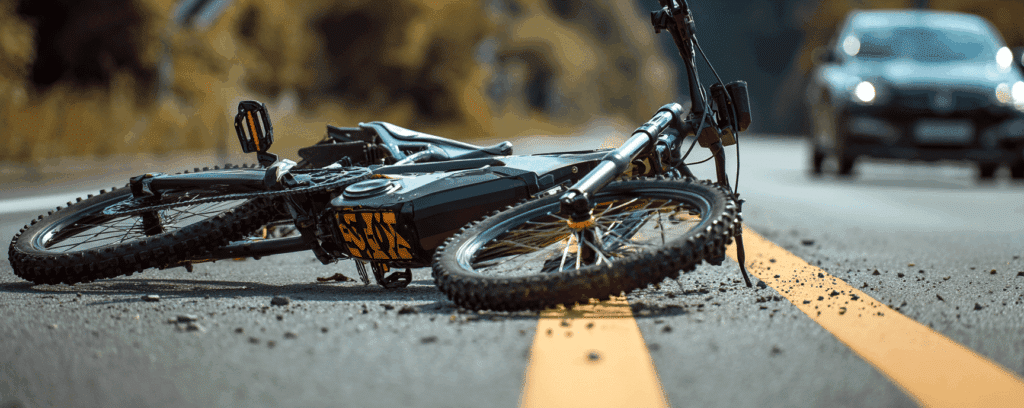
Understanding liability in e-bike vs car crashes in Oklahoma accidents can be complex. Learn how fault is determined, what insurance covers, and your legal rights after a collision.
When an electric bicycle and a vehicle collide on Oklahoma roads, determining who bears responsibility can be complex. The rise in e-bike popularity has created new legal questions about fault, insurance coverage, and compensation rights. If you’ve been involved in an e-bike versus car accident, understanding how Oklahoma law treats these incidents is essential for protecting your rights and recovering damages.
At Edwards & Patterson Law, we help clients navigate the aftermath of e-bike collisions, whether they were riding the e-bike or driving the vehicle. These cases require careful analysis of traffic laws, accident circumstances, and insurance policies to establish liability.

 Call Now
 Send Text
E-Bike Accident Lawyer
Contact us today for your free & confidential case review. Our team will help you get the compensation that you deserve.
How Oklahoma Treats E-Bike Accidents Differently Than Traditional Bicycle Crashes
Electric bicycles occupy a unique space under Oklahoma law. While they share similarities with conventional bicycles, their motorized components can affect how courts and insurance companies view liability in e-bike vs car crash situations in Oklahoma.
Oklahoma classifies e-bikes into three categories based on speed and power. Class 1 and Class 2 e-bikes, which travel up to 20 mph, generally follow the same rules as regular bicycles. Class 3 e-bikes can reach 28 mph and face additional restrictions. These distinctions matter when determining fault because they affect where riders can legally operate and what traffic laws apply.
The speed capability of e-bikes changes collision dynamics. A car driver might argue they had less time to react to an e-bike traveling 25 mph compared to a traditional bicycle moving at 12 mph. Conversely, e-bike riders might contend that their vehicle’s speed and visibility should have made them easier for drivers to notice.
Police reports and accident reconstruction become particularly important in these cases. Investigators examine whether the e-bike rider was operating within legal speed limits, following traffic signals, and using appropriate lanes or paths. They also assess whether the driver maintained proper lookout, yielded right of way, and observed safe following distances.
Who Bears Responsibility When Cars and E-Bikes Collide
Establishing fault in e-bike accidents follows Oklahoma’s modified comparative negligence system. This means each party’s actions are examined to determine their percentage of responsibility. If you’re found less than 50% at fault, you can recover damages reduced by your percentage of fault.
Several factors influence liability determinations:
Driver Responsibilities: Vehicle operators must exercise reasonable care around all cyclists, including e-bike riders. This includes checking blind spots, using turn signals, maintaining safe passing distances, and yielding when required. Distracted driving, speeding, or failing to yield the right of way often establishes driver fault.
E-Bike Rider Duties: E-bike operators must follow applicable traffic laws, use proper lighting after dark, signal turns, and operate predictably. Riding against traffic, running stop signs, or suddenly swerving into vehicle paths can shift liability toward the cyclist.
Road Conditions and Design: Sometimes, infrastructure plays a role. Poorly marked bike lanes, missing signage, or dangerous road defects can contribute to accidents and may introduce third-party liability claims against municipalities.
Equipment Factors: E-bike mechanical failures can complicate cases. If brake failure or throttle malfunction contributed to the crash, the rider might pursue product liability claims against the manufacturer while defending against driver claims.
Insurance adjusters often try to place maximum blame on e-bike riders, knowing many cyclists lack substantial insurance coverage. Having legal representation helps balance these negotiations and prevents unfair fault assignments.
Is Oklahoma a No-Fault State for Car Accidents?
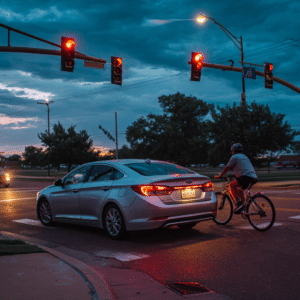 No, Oklahoma follows a traditional fault-based system for vehicle accidents. This distinction matters significantly for e-bike collision victims.
In no-fault states, injured parties file claims with their own insurance regardless of who caused the accident. Oklahoma requires the at-fault party’s insurance to pay for damages. This means establishing liability becomes the central issue in any e-bike versus car crash case.
For e-bike riders injured by negligent drivers, this system allows pursuit of full compensation from the driver’s liability policy. However, it also means drivers can seek damages from e-bike riders if the cyclist caused the collision.
The fault-based approach creates both opportunities and challenges. Injured parties can recover economic damages like medical bills and lost wages, plus non-economic damages, including pain and suffering. But they must prove the other party’s negligence caused their injuries.
This system places greater emphasis on accident investigation, witness statements, and expert testimony. Documentation becomes your strongest asset. Photographs of the scene, damaged equipment, injuries, and police reports all help establish what happened and who bears responsibility.
Contact us today for your free & confidential case review. Our team will help you get the compensation that you deserve.
What is the New 85% Law in Oklahoma?
The 85% rule affects criminal sentencing in Oklahoma, requiring violent offenders to serve at least 85% of their sentences before parole eligibility. While this criminal statute doesn’t directly impact civil liability in e-bike accidents, it can intersect with your case if the collision involved criminal behavior.
If a driver struck you while committing a crime—such as DUI, reckless driving, or fleeing police—criminal charges may proceed alongside your civil claim. The criminal case and civil lawsuit operate independently on separate tracks.
Criminal convictions can strengthen civil cases. A guilty verdict for reckless driving provides powerful evidence of negligence in your injury lawsuit. However, you don’t need to wait for criminal proceedings to conclude before pursuing compensation.
Understanding this distinction helps accident victims recognize they have civil rights regardless of whether prosecutors file charges. Some serious accidents result in criminal cases, while others remain civil matters even when one party clearly violated traffic laws.
What Is the Liability Coverage in Oklahoma?
Oklahoma requires minimum liability insurance coverage of 25/50/25:
- $25,000 per person for bodily injury
- $50,000 per accident for total bodily injury
- $25,000 for property damage
These minimums often prove inadequate for serious e-bike versus car accidents. E-bike collision injuries can be severe, resulting in broken bones, traumatic brain injuries, spinal damage, and extensive road rash. Medical treatment easily exceeds $25,000, especially when surgery, hospitalization, or long-term rehabilitation is required.
When the at-fault driver carries only minimum coverage, injured e-bike riders face potential compensation gaps. Several options may help:
Underinsured Motorist Coverage: If you carry this optional coverage on your own auto policy, it can provide additional compensation when the at-fault driver’s limits fall short. This coverage often extends to family members injured while cycling.
Multiple Liable Parties: Sometimes more than one party shares fault. A driver might bear primary responsibility while a negligent road maintenance contractor or defective e-bike manufacturer contributes secondary liability.
Personal Assets: In cases of gross negligence, injured parties may pursue the at-fault driver’s personal assets beyond insurance limits, though this often proves difficult to collect.
Given Oklahoma’s low minimum requirements, carrying robust underinsured motorist coverage protects you whether you’re in a vehicle, on an e-bike, or walking.
Evidence That Matters in E-Bike Collision Claims
Building strong liability cases requires specific evidence types. The hours and days immediately following your accident provide the best opportunity to preserve key information.
Photographs document collision dynamics that memories and verbal descriptions cannot capture. Capture the accident location from multiple angles, vehicle damage, e-bike condition, road markings, traffic controls, weather conditions, and visible injuries.
Witness information proves invaluable. Bystanders provide objective accounts of who had the right of way, whether signals were used, and how the collision occurred. Police reports compile this information, but obtaining witness contact information yourself creates backup if official reports contain errors.
Medical records link injuries to the accident. Seek immediate medical attention even if you feel relatively uninjured. Adrenaline masks pain, and some serious injuries like internal bleeding or concussions show delayed symptoms. Documentation creates the medical paper trail needed to prove injury causation.
E-bike data can provide objective evidence. Many electric bicycles record speed, power usage, and braking information. This data may prove you were traveling legally and operating safely when the collision occurred.
Traffic camera or business security footage sometimes captures accidents. Identifying nearby cameras quickly matters because many systems overwrite recordings after days or weeks.
Time Limits for Filing E-Bike Accident Claims in Oklahoma
Oklahoma’s statute of limitations gives injury victims two years from the accident date to file lawsuits. While two years seems lengthy, investigating claims, negotiating with insurance companies, and preparing cases takes considerable time.
Starting the process promptly protects your rights. Insurance companies must receive prompt accident notice per policy requirements. Delayed reporting can jeopardize coverage or allow insurers to deny claims based on late notice provisions.
Early attorney involvement preserves evidence while fresh, locates witnesses before they relocate, and prevents you from making recorded statements that damage your case. Insurance adjusters often contact accident victims quickly, hoping to obtain admissions of fault or recorded statements downplaying injuries before victims understand their situation.
Common E-Bike Versus Car Accident Injuries
 The vulnerability of e-bike riders compared to protected vehicle occupants means collisions often produce serious injuries. Understanding common injury patterns helps riders recognize when medical attention is necessary and what compensation should address.
Head injuries range from concussions to traumatic brain injuries. Even with helmet use, the force of vehicle impacts can cause brain trauma requiring extensive treatment and producing lasting cognitive effects.
Bone fractures occur frequently. Arms, wrists, collarbones, and ribs break when riders are thrown from bikes or crushed between vehicles and pavement. Leg and pelvic fractures happen when vehicles strike e-bikes from the side.
Road rash sounds minor, but it can be serious. High-speed slides across pavement remove skin layers, creating infection risks and permanent scarring requiring skin grafts.
Spinal injuries produce catastrophic consequences. Damage to the spinal cord can cause partial or complete paralysis, changing victims’ lives permanently and requiring lifetime care costing millions.
Contact us today for your free & confidential case review. Our team will help you get the compensation that you deserve.
How Edwards & Patterson Law Helps E-Bike Accident Victims
Handling liability in e-bike vs car crash cases in Oklahoma requires specific knowledge of cycling laws, traffic regulations, and insurance practices. Our firm represents both e-bike riders injured by negligent drivers and drivers facing claims after bicycle collisions.
We investigate accidents thoroughly, consulting accident reconstruction experts when needed to establish what happened. We handle all insurance company communications, preventing harmful recorded statements and low settlement offers that fail to address long-term needs.
Our approach focuses on documenting full damages. Medical expenses represent only part of your losses. We account for lost income, reduced earning capacity, pain and suffering, disability, and life quality changes.
When insurance companies refuse fair settlements, we prepare cases for trial. Our litigation experience motivates insurers to negotiate seriously, knowing we’re prepared to present your case to a jury if necessary.
If you’ve been involved in an e-bike versus car accident in Oklahoma, contact Edwards & Patterson Law for a consultation. We’ll review your case details, explain your rights, and help you understand the compensation you deserve. The legal system provides pathways to recovery, and we’re here to guide you through them.
Related Article(s)
What Happens If a Car Hits an E-Bike in Oklahoma City?
Oklahoma E-Bike Sidewalk Law and Liability: What Riders Need to Know
Last updated Wednesday, December 3rd, 2025