918-302-3700
Nursing Home Falls
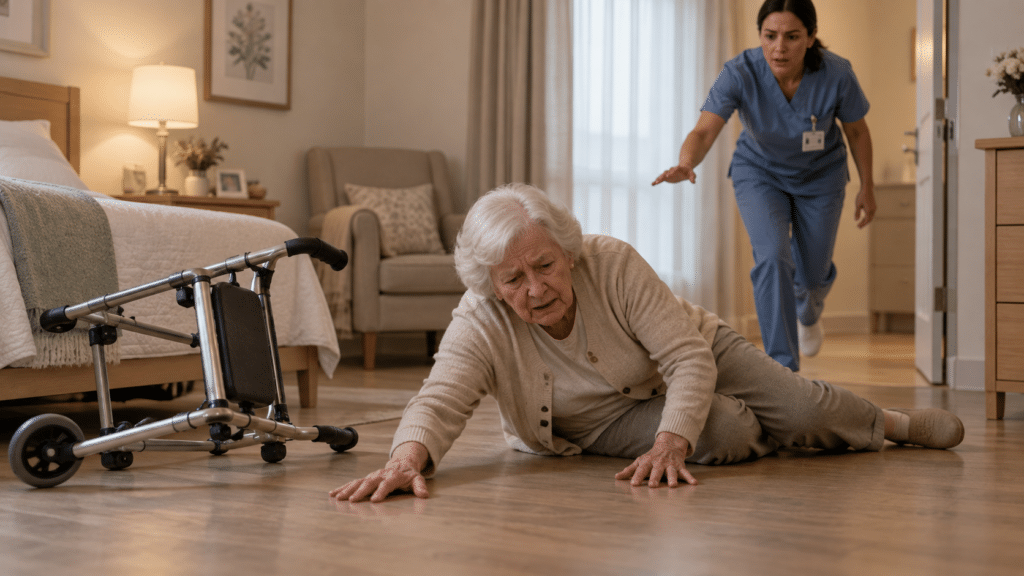
Yes, a family member of an elderly person living in a nursing home, or someone with legal authority for an elderly person who has suffered an injury due to a fall resulting from the nursing home’s neglect, can file suit against the nursing home. Negligence by the nursing home could be, for example, not providing the required assistance when it was necessary; ignoring a documented fall risk of the elderly person; or allowing known dangers (such as a slippery floor) or hazards (for example, tripping over objects in the hallways) to remain uncorrected.
Evidence that there is no negligence just because an individual fell is necessary to bring a lawsuit. Typically, evidence showing the nursing home provided inadequate care, which resulted in injuries to the elderly individual, will need to be presented. Evidence showing what occurred would typically come from medical records, care plans, incident reports, and/or witnesses.
Depending upon the specific situation, damages may also be able to compensate the injured party for any additional expenses including but not limited to doctor visits/bills, physical therapy/rehabilitation, pain and suffering.
Key Takeaways
- A nursing home is generally liable when the facility does not take reasonable measures to mitigate foreseeably hazardous conditions that result in falls, or otherwise fail to provide the level of supervision and assistance as required by the resident’s individualized assessment of needs.
- The three types of falls in nursing homes require very different methods for reducing risk and ensuring resident safety.

Get Your FREE & Confidential Case Review Today!
 539-295-4225
Loved one Facing Nursing Home Abuse?
Contact us today for your free & confidential case review. Our team will help you get the compensation that you deserve.
Understanding Nursing Home Liability Works for Fall Injuries

There is a liability on behalf of the nursing home for falls, as long as the nursing home fails to perform those reasonable duties to preclude falls. The duty goes beyond performing reasonable safety measures; it extends to providing proper supervision of and monitoring of the patient.
Negligence regarding nursing home resident care (i.e., failure to appropriately utilize fall interventions or failure to properly monitor the activities of patients) can produce extreme outcomes. The injured nursing-home resident may also have a valid claim for damages, and if so, a legally-authorized representative can pursue that claim on their behalf. Implementing fall intervention care plans can be one way in which facilities can decrease fall risk and protect residents.
In addition to educating themselves about the responsibilities and possible liabilities of the nursing home, families will be empowered to demand accountability for the failures of nursing homes. In order for families to prevail in a claim based upon nursing home negligence, there must be proof that the facility did not meet the standard of care that was reasonably expected. There is typically documentation demonstrating the failure of staff to receive adequate training; documentation showing the failure of the facility to follow good safety practices; and documentation showing that the facility failed to develop and implement sufficient interventions to prevent falls.
By understanding these concepts, families can better navigate the legal system and obtain justice for their loved ones’ injuries.
Causes of Falls in Nursing Homes
F
Falls in nursing homes are a major concern in this country with approximately 1,900 fatal injuries resulting from falls each year. Approximately seventy-five percent of all elderly nursing home residents will experience a fall while residing in a nursing home. These falls can result in serious physical and psychological injury to residents.
Knowledge of the reasons why falls occur in nursing homes enables both addressing specific risks and developing ways to effectively prevent falls. Falls are generally categorized into three main areas: accidental falls, physiological falls, and behavioral falls. While each area represents a different category of fall causation, they require different approaches to prevention.
Accidental Falls
Accidental falls most frequently result from environmental hazards in the nursing home facility. Common examples of hazardous environments contributing to these types of falls include wet floors, poor lighting, and cluttered hallways. Ensuring that nursing homes maintain a safe environment addresses many of these types of hazards and reduces opportunities for accidents like slips and falls.
The severity of accidental falls can vary greatly. However, many of these types of falls can result in serious injuries such as head trauma, fractures, and traumatic brain injuries. A significant number of accidental falls occur because of staff members’ failure to remain vigilant in identifying and preventing fall risk factors among residents. Proper supervision and implementation of fall prevention plans by nursing home staff can greatly minimize the opportunity for accidental falls and preventable falls.
Physiological Falls
Physiological falls are primarily attributed to a variety of health problems experienced by elderly individuals including poor vision and cognitive impairment. As a result of either condition, elderly residents become increasingly prone to experiencing falls and/or being injured when attempting to ambulate. To minimize physiological falls, nursing home staff can offer support and resources to facilitate residents’ ambulation needs.
Physicians also play a role in minimizing physiological falls through recommendations for medication and supplement intake management related to managing the underlying medical conditions. Providing solutions to physiological issues creates a more secure environment for residents and minimizes opportunities for falls.
Behavioral Falls
Behavioral falls result from residents attempting to get up or move about unassisted. Many times, behaviorally related falls result in serious injuries illustrating the importance of nursing home staff assisting residents when needed.
Creating a supportive environment for residents where they know that assistance is available provides an opportunity for nursing homes to greatly limit behavioral falls and promote the well-being of their residents.
Proving Negligence in Your Nursing Home Fall Case
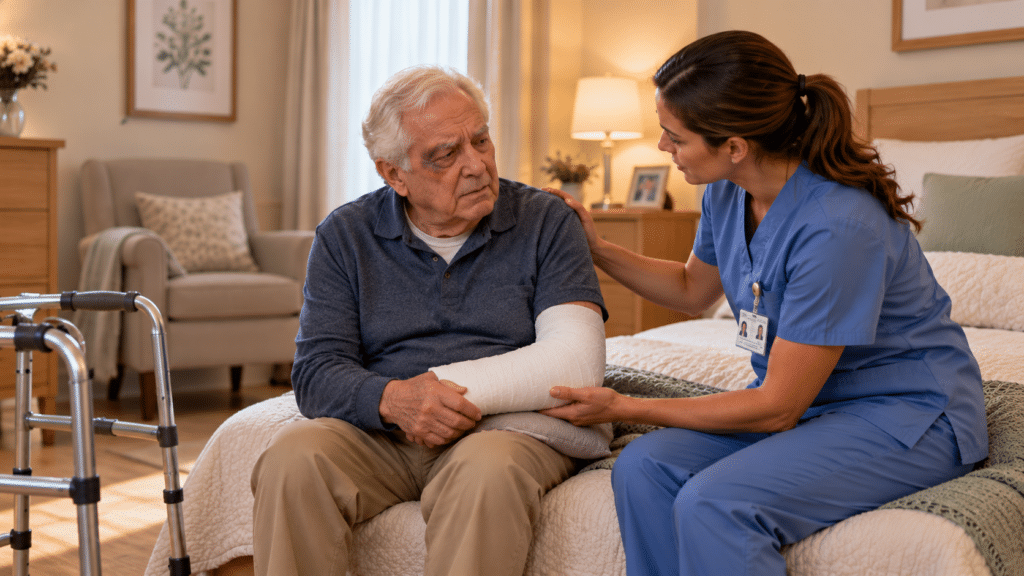
To prove that a nursing home was negligent in an injury caused by a fall, you must show that the nursing home fell short of its duty to provide appropriate care. Examples of how this could occur include; improper training of nurses, unsafe policies, lack of follow through of fall prevention programs, etc.
Evidence is key to obtaining a fair settlement in cases involving falls. The stronger your evidence (documented), the stronger your claim will be.
Your attorney will gather all relevant information to support your claim. Medical records from your loved one’s physician and/or hospital records, witness statements, photos taken at the time of the fall, documentation of any observed signs of abuse/neglect (when the signs began to appear) and notes regarding communication you had with nursing home employees regarding the fall are all examples of what your attorney will need to help build your case.
Once your attorney has sufficient information, she/he can begin collecting additional information during the “discovery” process which will serve to strengthen your case against the nursing home. The longer and more severe the nursing home’s neglect/insufficient supervision contributed to your loved ones injuries/deterioration, the higher their potential liability will be. In addition to demonstrating a lack of adequate supervision, if the nursing home did not develop and implement a plan to prevent falls, then this too may increase their liability. Ultimately, building a strong case will allow families to pursue justice against nursing homes for negligence.
Get Your FREE & Confidential Case Review Today!
Loved one Facing Nursing Home Abuse?
Contact us today for your free & confidential case review. Our team will help you get the compensation that you deserve.
Important Steps After a Nursing Home Fall
Immediate response to a nursing home fall is critical to protect both the resident’s health and their safety. Dependent upon the type of situation or regulatory requirements in place at the time of the incident or event, a facility could be obligated to inform the family or representative of the resident involved in the fall and/or resulting injuries as well as the treating physician, relevant governmental agencies, and/or other parties who have an interest in being informed regarding this incident.
There are several steps that you can follow after a nursing home fall. They include; documentation of the event, seeking immediate medical evaluation, and filing reports with those who oversee the facilities. Documentation is important as it allows for a review of the cause(s) of the fall and any corrective actions that can be implemented to improve safety. Filing reports also enables oversight organizations to evaluate whether the facility is providing safe living conditions.
Documentation of the Fall
Documentation of the fall is needed for medical and legal reasons. Documentation includes a description of how the fall happened and any contributing factors (i.e., slippery floors, lack of assistive devices). Providing detailed descriptions of all aspects of the fall will provide evidence for any legal actions that may need to be taken against the facility.
Documentation prior to litigation is often used by attorneys to develop a stronger case. The documentation will also enable your attorney to better determine if there was negligence involved in your fall.
Medical Evaluation after the Fall
Following a fall at a nursing home, you should seek out medical treatment immediately. Many times, people do not realize that they have been injured until hours or even days later. Medical evaluations are not only beneficial for identifying any injuries sustained during a fall but will also document any other problems that existed before the fall.
The medical records obtained from these evaluations are very helpful when developing a legal claim. Additionally, having medical records of your condition prior to the fall can greatly strengthen a claim of negligence being filed against a nursing home.
Filing Reports
You should file reports regarding your fall with agencies such as Adult Protective Services (APS), State Ombudsmen Office, and State Department of Health. By doing so, you are enabling agencies to investigate any allegations of abuse/neglect and to monitor compliance with state/federal regulations.
Legal Process for Filing a Lawsuit Against a Nursing Home Due to a Fall
Filing a lawsuit against a nursing home due to a fall involves numerous steps that begin by filing a claim and possibly ending with the nursing home agreeing to settlement. A resident that is injured as a result of falling and/or suffering injury, or their family on their behalf, can potentially pursue a lawsuit against the party(s) responsible for their injury.
If the resident dies due to the negligence of another party, then it will be necessary to utilize Oklahoma’s Wrongful Death Statutes to determine which individual(s) will have the authority to file an action for wrongful death.
Residents of Oklahoma who suffer harm due to the negligence of staff members while residing at a nursing home are permitted by Oklahoma Law to seek damages (i.e., compensation), provided that such actions are brought within the statute of limitations.
The statute of limitations in many cases involving claims for personal injury suffered by a nursing home resident is two years from the date of incident. However, each case has its own unique set of facts that determine whether the two year limitation begins running when the plaintiff knows he/she was harmed, when he/she knew that someone else caused his/her injury, or some other point.
A large portion of elderly fall cases involving nursing homes are settled before a jury renders a verdict. Therefore, many of those lawsuits are not tried and litigated in court.

File The Complaint
Family members who suspect neglect or abuse at a nursing home can file a complaint to initiate legal action. Once a nursing home has been proven liable for an accident, such as a fall, family members can file a lawsuit and seek compensation. The lawyers at Edwards & Patterson Personal Injury Law can help determine whether or not a fall could have been prevented and assist in the preparation and filing of the paperwork required for the lawsuit.
Discovery
Following the filing of a lawsuit, attorneys representing the plaintiff will gather all available evidence and documentation. Consultation with an elder abuse attorney usually does not involve paying anything out-of-pocket; therefore, families should be able to seek justice through a complimentary consultation and complimentary case evaluation regarding elder abuse.
Settlement Negotiations
In many instances settlements are negotiated during the process of gathering evidence so that the parties do not have to incur the expense associated with protracted litigation. If you can show clear proof of negligent conduct by a nursing home, then it may be possible to negotiate a settlement.
The initial settlement offered will rarely reflect the total amount of damage an injured party has sustained. When deciding whether to settle your case or go to trial, carefully consider the advantages and disadvantages of each option.
A settlement received from a nursing home fall case usually takes several months to two years for completion. In addition, there is no guarantee that your case will result in a settlement.
Potential Compensation in Nursing Home Fall Lawsuits
Compensation for nursing home falls may cover medical bills, physical therapy, medical equipment, long-term care, severe injury costs, and funeral expenses. Hard damages cover surgery bills, rehabilitation costs, and funeral costs. In cases involving severe injuries, such as fractures or head trauma, substantial financial compensation is often pursued.
Families may seek secure financial compensation for emotional suffering and pain from nursing home falls for surviving family members. The severity of injury, degree of negligence, and medical costs significantly influence the final settlement amount. Non-economic damages like pain and suffering, loss of consortium, and mental anguish are also considered during settlement calculations.
Punitive damages may be awarded in cases of gross negligence by staff members.
Compensation Available in Lawsuits Regarding Falls at Nursing Homes
Possible compensation for falls in nursing homes includes medical bills, long-term care, funeral expense, severe injury cost, medical equipment, and physical therapy. Hard damages include surgical bills, rehabilitation costs, and funeral costs. When an individual suffers from a serious injury (i.e., fracture(s) or head trauma), significant amounts of money are frequently sought in order to compensate them for their injuries.
Depending upon the nature of the incident, the injured party (and their immediate relatives) may qualify for specific types or categories of damages which have been recognized by law, specifically if there is a fatality resulting from the fall.
Factors influencing the total settlement amount of a claim include: the type and extent of injuries sustained; the level of negligence exhibited by nursing home employees; and the overall medical treatment required by the injured party. Non-monetary damages, including but limited to pain and suffering, may also be recoverable depending on the current statute related to non-economic damages and/or any applicable exceptions.
Punitive damages may be available in limited circumstances if evidence is presented to show that Oklahoma’s statutory standards have been met (i.e., “reckless disregard for the rights of others”).
Timeframe to File a Claim Against a Nursing Home Due to Negligence Causing a Fall
Most claims involving injuries to patients in nursing homes have a time limit for filing in Oklahoma that is two years, but the exact accrual date and/or whether an exception will apply depends upon the specific factual situation.
Deadlines in Oklahoma relating to nursing home injury claims should be evaluated based on the statute(s) that apply to your nursing home injury claim, and not by a generic time frame.
The general time frame for a covered patient care claim in which the claimant was aware of an injury, death, or other condition that is part of their complaint is generally two (2) years. The time frame begins to run at either the date on which the claimant had actual knowledge of his/her/their injury, death or condition; or alternatively at the date by which the claimant has acted with reasonable diligence as required to obtain such actual knowledge.
Wrongful death actions under Oklahoma law are subject to a two year statute of limitations. As with other statutes of limitation, each state has its own specific provision allowing for possible exceptions to this rule, particularly when the injury was not initially evident.
Working with an attorney experienced in nursing home negligence allows families to avoid making critical mistakes in pursuit of justice. At Edwards & Patterson Personal Injury Law we have handled numerous cases involving nursing home falls. We provide our clients with experienced legal advice regarding potential lawsuits related to their loved ones’ injuries.
Experienced lawyers representing victims of nursing home abuse/ neglect increase the likelihood of receiving favorable results in court. An attorney representing a client experiencing nursing home abuse/ neglect helps alleviate some of the stress associated with managing a difficult situation, while guiding his/her client through the settlement process.
Frequently Asked Questions
Can I sue a nursing home for my mother’s fall?
Yes. If it can be proven that a nursing home failed to uphold its duty of reasonable care and contributed to the cause of your mother’s fall, then yes – you can sue the nursing home for her fall.
What kind of compensation can I expect in a lawsuit over a fall at a nursing home?
Compensation for medical bills, physical therapy, long-term care costs, emotional suffering, and wrongful death expenses may be available in a nursing home fall lawsuit. Each element represents the various ways the incident impacted the victim and his/her family.
After a fall occurs at a nursing home what documentation should be kept?
Documentation detailing all aspects of the fall including: environmental factors surrounding the fall; activities being performed by the patient prior to falling; and conversations between patients/staff members are important. Documentation is key to providing for proper evaluation and preventing future incidents.
How can an attorney experienced in nursing home abuse assist me in obtaining compensation for my loved one’s fall?
An elderly abuse attorney can be very important when it comes to a fall injury because they will be able to understand all of the complicated legal aspects of your case; they will also be able to obtain evidence that may have been overlooked; and most importantly, they will be your advocate through the whole process to help you receive the best possible outcome for your case.
Last updated Thursday, October 15th, 2026