918-302-3700
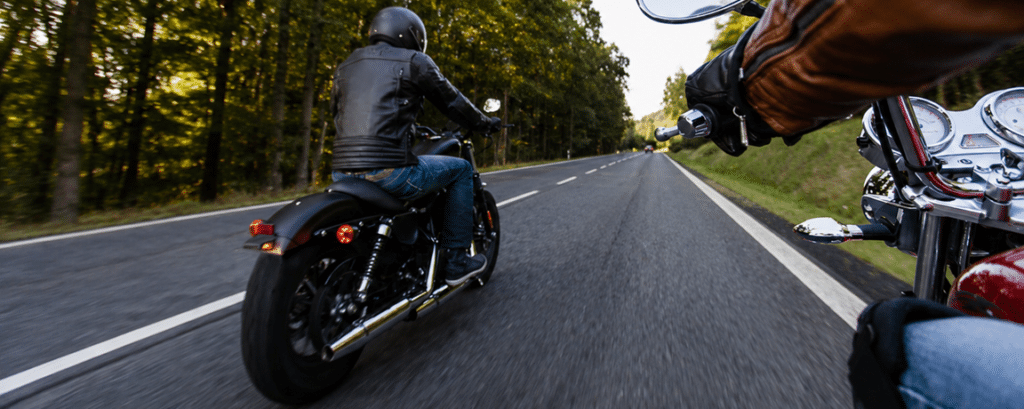
In addition to its many scenic routes, including parts of Route 66 and the Talimena Scenic Byway, Oklahoma offers countless miles of open highways perfect for cruising, making it an attractive destination for motorcyclists. And while Oklahoma is indeed a great place to ride a motorcycle, understanding the motorcycle-specific laws of the state could prove to be extremely valuable to you.

 539-295-4225
Contact us today for your free & confidential case review. Our team will help you get the compensation that you deserve.
While avoiding a fine is a good enough reason to learn the motorcycle laws of Oklahoma, knowing these laws can help protect both your safety as a motorist and your ability to collect damages if you’re involved in an accident. For example, our attorneys at Edwards & Patterson Law have handled many motorcycle-related personal injury claims in Oklahoma and believe strongly that knowing the laws regarding motorcycle endorsements and licenses can greatly impact your claim if you are injured.
Definition of a Motorcycle in Oklahoma
In addition to explaining the motorcycle laws in Oklahoma, it would be helpful to establish what constitutes a motorcycle in accordance with Oklahoma law, according to Title 47 O.S. § 1-135, a motorcycle is defined as: any motor vehicle having a seat or saddle for the rider, designed to travel upon not more than three wheels in contact with the ground, and either powered by an internal combustion engine of not less than 150 cubic centimeters displacement or powered by an electrical motor of not less than 1,000 watts.
Related Article(s)
Is Lane Splitting Legal in Oklahoma?
Understanding what qualifies as a motorcycle in Oklahoma is crucial. In defining what a motorcycle is, Oklahoma establishes several key differences:
Motorcycles are governed by the complete set of rules outlined in this guide.
Motor-driven cycles are very close to motorcycles; however, they usually have engines that are smaller than 150 cc. Although the rules for operating them are slightly different from those for Motorcycles, motor-driven cycles are considered a type of motorcycle.
Mopeds generally have smaller engines (usually less than 50 cc). Therefore, mopeds have different licensing and equipment regulations.
Autocycles are three-wheeled vehicles that have enclosed cabs, steering wheels, and seat belts. Autocycles are registered and regulated in much the same manner as cars rather than Motorcycles.
If you are unsure what class your motorcycle falls into, please consult with the Oklahoma Department of Public Safety or OSHD. Misclassifying your motorcycle could affect licensing, registration, and insurance requirements.
Licensing and Endorsement Requirements
As stated previously, you cannot operate a motorcycle within the boundaries of Oklahoma unless you possess the appropriate documentation. Your age and method of obtaining the necessary documentation determine which type of documents you will receive. Most Riders will obtain an “m” endorsement attached to their basic Oklahoma driver’s license. For those seeking a full endorsement, you must be at least sixteen (16).
Obtaining the M Endorsement
To gain the full endorsement for operating a motorcycle in Oklahoma, you must pass both a written test and a visual test. Additionally, you will have to successfully pass a motorcycle skills test. Alternatively, if you are eighteen (18) or older, you may bypass taking the motorcycle skills test after completing an approved Motorcycle Safety Foundation (MSF) course. Regardless, completing such a course is highly recommended. We will discuss further reasons why later.
Riders who are under the age of eighteen (18) will be required to attend an MSF course prior to attempting to obtain the motorcycle endorsement.
Learners Permits
Oklahoma provides learner’s permits specifically for motorcycle operation. Those as young as fourteen (14) may obtain a motorcycle-only Learner’s permit. Sixteen (16)-year-olds can obtain a Learner’s permit to work toward their full endorsement on their driver’s license.
Out-of-State Riders
If you currently hold a valid motorcycle endorsement issued in another State and are planning to move to Oklahoma, you may continue to ride your motorcycle without obtaining another endorsement. If you plan to register your motorcycle in Oklahoma, you will need to submit an application for transfer at an Oklahoma DPS office. Generally speaking, your previous endorsement will be recognized; however, you may need to provide proof of identity and/or undergo a vision test. Depending on your individual circumstances, you may also be required to undergo additional testing.
Penalty for Riding Without a Valid License or Endorsement
Riding without the correct documentation may result in fines ranging from $50 to $300 and possibly up to thirty (30) days’ incarceration. Perhaps more importantly, failing to possess valid documentation at the time of an incident may severely hinder your ability to file an effective claim for damages due to injuries sustained while riding. The opposing party will likely use your failure to comply with the law as evidence that you were operating recklessly since you had no business on the road anyway.
Get Your FREE & Confidential Case Review Today!
Motorcycle Accident Lawyer
Contact us today for your free & confidential case review. Our team will help you get the compensation that you deserve.
Helmet and Other Protective Gear Laws
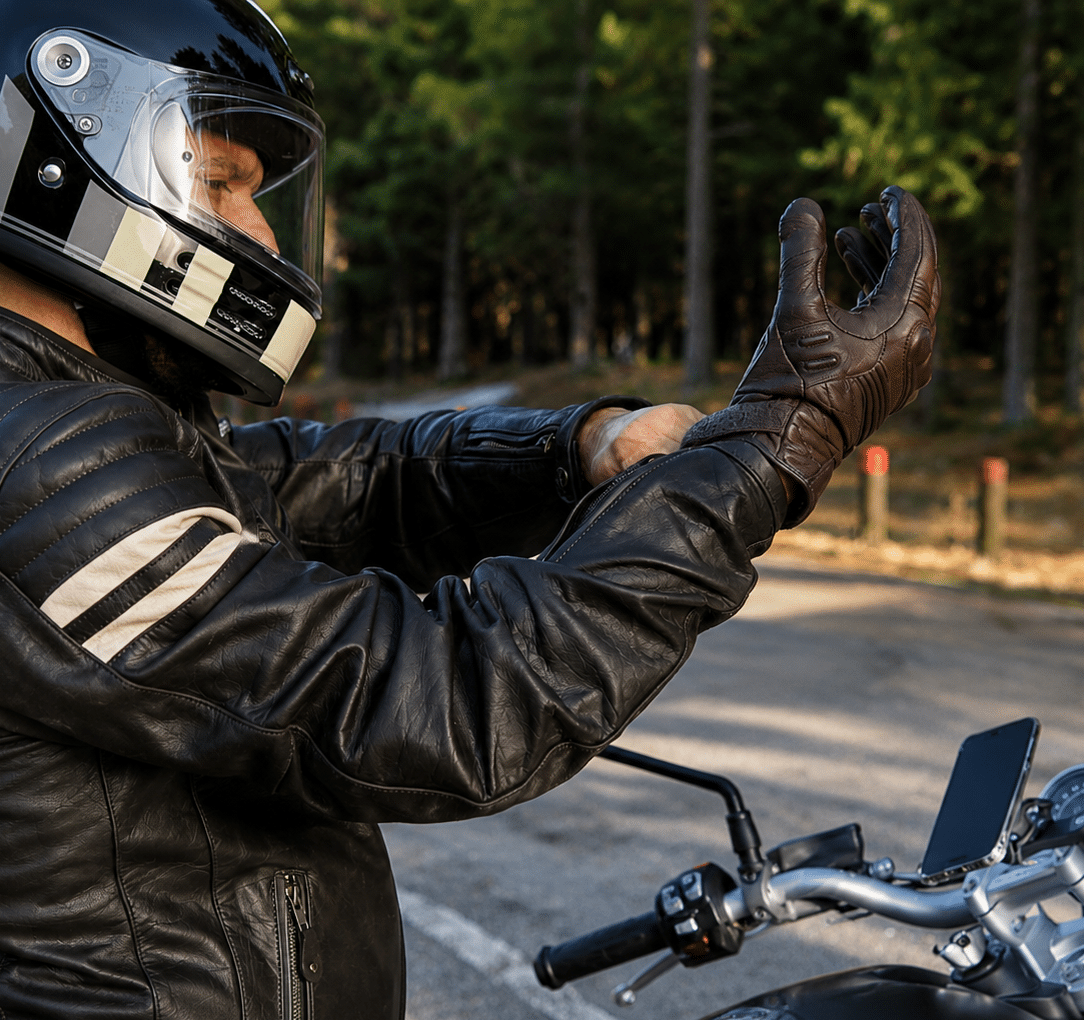 Oklahoma’s helmet law is partially in effect, and it is essential to understand fully what this law entails.
Helmet Requirement for Passengers Under 18
According to Oklahoma law, minors traveling as passengers on motorcycles must wear helmets at all times. Adults (those 18 or older) have the option of wearing helmets.
Regardless of whether the law mandates that adults wear helmets, there is overwhelming scientific evidence supporting their use. The National Safety Council reports that helmets decrease the likelihood of death from a motorcycle accident by approximately 37%. At Edwards & Patterson Law Firm, we strongly recommend wearing helmets regardless of the statute.
Helmet Standards
When choosing a helmet, look for one that meets the federal safety standards as established by 49 C.F.R. § 571.218. Ensure that your helmet carries a DOT sticker located on the rear of the helmet. Be cautious of counterfeit stickers on “novelty” helmets that are non-compliant. Helmets meeting these standards offer federally adequate protection in the event of a collision.
Comparative Negligence Effect of Not Wearing a Helmet
There is another aspect of not wearing a helmet that riders do not commonly consider. When involved in an accident and did not wear a helmet, the insurance company representing the opposing parties will nearly always bring attention to this fact. Pursuant to Oklahoma’s modified comparative negligence statute, if you are deemed partially responsible for your own injuries, then your compensation will be decreased by that amount. We will address this topic further during our discussion of comparative negligence; however, simply put, wearing no helmet can cost you money in your claims process, regardless of whose fault was determined to be at fault for causing the accident.
Eye Protection
Additionally, Oklahoma law requires eye protection for Riders traveling without windshields. Goggles or ANSI-approved eye protection must be worn by all Riders regardless of age.
Additional Protective Gear Recommendations
While Oklahoma does not require gloves, jackets, or boots to be worn while riding a motorcycle, there is substantial evidence showing that wearing abrasion-resistant gear greatly reduces the potential for sustaining severe road rash injuries in the event of a collision. High-visibility clothing can also help increase awareness among motorists, allowing them to notice you more clearly at dawn and dusk when motorcycle collisions occur most frequently.
Required Motorcycle Equipment
There are certain pieces of equipment that all street-legal motorcycles must contain per Oklahoma law. Failure to maintain all required equipment can result in citations and possible increased liability if involved in an accident.
| Required Equipment | Details |
| Rearview mirrors | Two mirrors, each with at least a three-inch reflective surface. Required to improve situational awareness and reduce blind-spot accidents. |
| Fenders | A fender over each wheel to prevent road debris from striking riders or nearby vehicles. |
| Horn | Must be functional. Used to alert other drivers to your presence. |
| Muffler or noise-suppressing system | Required under Oklahoma law. No specific decibel limit is set, but excessive noise is prohibited. |
| Speedometer | Must be in working order. |
| Headlight and taillight | At least one off-white headlight and a red taillight, visible from 500 feet. Reflectors must be visible between 100 and 600 feet. Headlights are required at all times, day and night. |
| Windshield or protective eyewear | Riders without a windscreen must wear goggles or ANSI-approved eye protection. |
| Handlebar height | Handlebars cannot exceed the eye level of the operator when seated. |
Although these are the minimums for required equipment, failing to maintain compliance with these items may result in citations; however, it could also create issues for opposing counsel when attempting to prove liability if involved in an accident.
Contact us today for your free & confidential case review. Our team will help you get the compensation that you deserve.
Passenger Laws
Oklahoma law allows riders to transport passengers; however, there are certain stipulations that must be met prior to transporting anyone. Specifically, motorcyclists who wish to carry passengers must meet several requirements. First, the motorcyclist transporting passengers must be at least 16 years old.
Second, the motorcycle must be designed to accommodate more than one person by containing a double seat and footrests for each passenger.
Thirdly, if the motorcycle does not have an enclosed cabin and contains a sidecar, then each wheel on the motorcycle must have a diameter of at least twelve inches.
Finally, all passengers on board who are under 18 years of age are required to wear helmets unless the parent/guardian provides documentation indicating otherwise.
Prior to carrying passengers on your motorcycle, consider communicating with your passengers beforehand regarding hand signals/stop signals and providing greater stopping distances prior to arriving at stops or intersections. In addition, since adding weight affects how your motorcycle handles, try not to make sudden movements as you travel down the road, as your motorcycle will be affected accordingly. Many motorcyclists have experienced loss of control when carrying passengers due to movement within the cab or sidecar area of the vehicle while traveling down the road. Take extreme care when transporting passengers on your motorcycle.
Lane Splitting Laws & Regulations In Oklahoma
When riding on Oklahoma highways and city streets, there is no room for error, whether you’re caught in traffic or cruising down the highway. In Oklahoma, lane splitting is illegal and will result in a citation and fine. Additionally, lane splitting creates a safety issue since not all drivers check their rearview mirrors or blind spot before changing lanes, despite the fact that they should.
Riding Side-by-Side
In Oklahoma, the law does not specifically prohibit two motorcycles from riding side-by-side in the same lane; however, common sense dictates otherwise. When riding two abreast in the same lane, there should be sufficient width to allow for both bikes to ride comfortably and safely. Riding two abreast in traffic also increases the potential for getting struck by debris and reduces each rider’s reaction time to hazards.
“Dead Red” Law
The dead red law is frequently brought up in discussions about the rights of motorcyclists. If your motorcycle is not detected by a malfunctioning traffic light, and it remains red for you, Oklahoma law permits you to go through the intersection after stopping completely and determining that it is safe to continue. This law addresses a problem many motorcyclists experience daily, being forced to wait behind a red light until another vehicle arrives to trigger the signal for you.
Handlebar Height
As discussed in the equipment section, extended or “ape hanger” handlebars that place your hands above your head are prohibited in Oklahoma. Handlebar height cannot extend past the rider’s line of sight when seated.
Wearing Headphones While Riding
While Oklahoma has no specific statute prohibiting motorcyclists from wearing headphones while operating their motorcycles, using them greatly decreases a rider’s awareness of surrounding traffic, horn honking, and sirens from emergency vehicles. Should a motorcyclist be involved in a collision while wearing headphones, the fact that he was wearing headphones would likely be used to show that the rider was distracted.
Comparison Between Oklahoma and Surrounding States Regarding Lane Splitting
| State | Lane Splitting Legal? |
| Oklahoma | No |
| Texas | No |
| Arkansas | No |
| Kansas | No |
| Missouri | No |
| New Mexico | No |
Travelers on Route 66 or crossing into neighboring states will find that none of the surrounding states permit lane splitting. The laws regarding lane splitting are uniform across this entire area.
Insurance Requirements and Penalties
Oklahoma is considered an at-fault state because the party responsible for causing the accident is financially accountable for all costs incurred due to the accident. As such, maintaining adequate insurance coverage protects more than just your financial interests; it also provides protection for others sharing the road with you.
Minimum Insurance Requirements
Oklahoma requires the following levels of liability insurance for motorcyclists:
- $25,000 per person for bodily injuries or death;
- $50,000 total for all persons in an accident for bodily injuries or death;
- $25,000 total for property damage;
Again, please note that these are minimum requirements and not recommendations. The medical expenses associated with a severe motorcycle accident can easily exceed the above amounts, leaving you personally liable for any additional amount that exceeds your insurance coverage.
Optional Uninsured and Underinsured Motorist Coverage
Optional coverage includes uninsured/underinsured motorist coverage (UM/UIM). We highly recommend purchasing this type of coverage. Many motorists do not maintain sufficient insurance coverage, and should you be involved in a collision with an inadequately insured party, your UM/UIM coverage will protect you by filling the gaps left by the other parties’ insurance. We have witnessed several cases where this coverage provided a critical difference for a rider to receive fair compensation versus walk away nearly empty-handed.
Consequences of Riding Without Insurance
Should you fail to provide proof of insurance coverage, you face the possibility of fines, loss of your driving privileges, and/or impoundment of your vehicle. Furthermore, if you cause an accident while uninsured, your personal assets become subject to litigation. Conversely, if you are injured in an accident caused by another party while uninsured yourself, this may hinder your ability to collect compensation.
Contact us today for your free & confidential case review. Our team will help you get the compensation that you deserve.
Common Violation Examples and Possible Penalties
Below is a summary of examples of common violations and the penalties associated with each:
| Violation | Potential Penalties |
| Riding without a valid motorcycle endorsement | Fine of $50-$300; up to 30 days in jail |
| Riding without required insurance | Fine; possible license suspension; vehicle impoundment |
| Lane splitting | Traffic citation; fine |
| Helmet violation (rider or passenger under 18) | Traffic citation; fine |
| Equipment violations (lights, mirrors, etc.) | Traffic citation; possible fix-it ticket |
Penalties are just part of the equation. Each citation affects your driving record. Your driving history is utilized by your insurance provider to determine premium rates. Repeated citations may limit your access to affordable auto insurance or increase your rate substantially upon obtaining new policy coverage.
Furthermore, citations may limit your right to recovery in a personal injury case. For example, if you received a citation for failure to wear a helmet and suffered a head injury during the incident, or if you received a citation for failing to ensure your motorcycle equipment was properly functioning prior to entering traffic, and your lack of compliance resulted in an accident occurring, that information will likely be introduced as relevant to your case.
Comparative Negligence and Personal Injury Claims
As an injured motorcyclist, you could be entitled to compensation under the theory of personal injury. However, Oklahoma uses a modified comparative fault rule, which reduces your recovery if you were partially responsible for the incident. In Oklahoma, your compensation will be reduced by your degree of responsibility. As such, if you were determined to be more than 50 percent at fault for the accident, then you may recover nothing.
Equipment and Helmet Violations as a Basis for Fault
In motorcycle cases, insurance adjusters and defense attorneys look for any basis upon which to place fault on the injured motorcyclist. For example, if you chose not to wear a helmet and suffered a head injury, the defense attorney will assert that the severity of your injury would have been less if you had worn a helmet. This rationale has merit regardless of whether or not you live in an “adult helmet” state like Oklahoma. By failing to use proper safety equipment, you create an opportunity for the defense attorney to attribute greater fault and thereby diminish the award that you will receive.
Similarly, the same reasoning applies to equipment failures. For example, if your headlight was inoperable and you were struck while operating your motorcycle during hours of darkness, the defense attorney will argue that your motorcycle was difficult to observe. Additionally, if your speedometer failed and you were unable to determine your speed, the defense attorney will argue that you did not properly monitor your speed.
Practical Application
For instance, assume that a distracted motor vehicle operator ran a stop sign and collided with a motorcyclist who was not wearing a helmet. The motorcyclist suffered a significant traumatic brain injury. The jury could find that the distracted motor vehicle operator caused eighty percent of the damage and that the motorcyclist caused twenty percent of the damage for failing to wear a helmet. Therefore, instead of receiving $500,000 in damages, the motorcyclist would receive $400,000 in damages.
However, now consider the above fact pattern except for the fact that the motorcyclist was wearing a helmet. In this circumstance, the defense attorney loses one of his primary arguments against the motorcyclist, and the motorcyclist’s share of responsibility will likely decrease significantly.
Protecting Your Claim
To protect your claim, document compliance. Maintain proof of liability insurance on your motorcycle. Document your motorcycle’s condition prior to extended trips with photographs. Consider completing an MSF (Motorcycle Safety Foundation) course as an avid rider. If you complete an MSF course, you will receive documentation of your participation in the course. Documentation of completion of an MSF course is evidence that you approached training with seriousness. While there is no assurance that you will achieve a successful outcome, documentation is a strong deterrent to opposing counsel assigning fault to you.
Prior to speaking with an insurance adjuster representing the party responsible for causing harm to you after being involved in a motorcycle collision in Oklahoma, contact an attorney. Insurance companies’ adjusters are trained professionals whose goal is to obtain information that can be used against you to limit your potential financial recovery. At Edwards & Patterson Law, we provide complimentary consultations regarding your claims. Furthermore, we only charge a fee when we successfully resolve your claims.
Contact us today for your free & confidential case review. Our team will help you get the compensation that you deserve.
Best Practices and Recommendations for Oklahoma Riders
Knowing and understanding applicable laws is one method of protecting oneself. Riding safely is another. Our experienced riders and attorneys at Edwards & Patterson consistently recommend several best practices below:
Defensive Riding
Other road users do not always perceive motorcycles as readily as they perceive automobiles. Motorcycles present themselves as smaller objects than automobiles in relation to size. Frequently, motorcyclists are located within drivers’ blind spots. Maintain at least a three-second following distance behind vehicles ahead of you. Increase the gap in adverse weather conditions or congested highways. When approaching intersections where you possess the right-of-way, position yourself where you are most observable by drivers ahead of you. Scan intersections before proceeding into them as well.
Oklahoma Weather Conditions
While Oklahoma is known for producing harsh weather conditions, high winds, particularly those found in western Oklahoma, can rapidly cause loss of control over motorcycles. Heavy rain associated with thunderstorms can greatly affect your ability to slow down once you encounter inclement weather. Monitor local forecasts before you begin riding. Give yourself ample additional time and space should you experience deteriorating weather conditions while en route. Investing in a full-face helmet and a jacket with waterproof capabilities will provide added protection.
Group Riding
Formation riding allows multiple riders to travel together and enjoy riding in groups. To ensure safe group riding, communicate among group members prior to commencing your journey. Define hand signals before beginning your ride. Travel in a staggered formation so that each member of the group possesses sufficient braking distance and visual access. Identify a leader and follower rider within the group prior to commencing the ride. Develop procedures related to lane changes and stops within your group. Do not engage in formation riding beyond your comfort zone or riding abilities.
Pre-ride Vehicle Inspection
Conduct the following basic inspection prior to every ride: tire air pressure and tread depth, operation of brakes, fluid levels (e.g., engine oil), headlamp, taillight, and turn signal functions. Each of the inspections mentioned above is often mandated by law as well. Failure in any area listed above can result in either a minor near-miss or potentially a catastrophic event.
Rider Education
Education and safety equipment have proven to be the two leading ways to reduce motorcycle fatality rates, according to statistics released by the Oklahoma Highway Safety Office. Whether you are a novice rider or simply seeking to enhance your existing skills.
The MSF Basic Rider Course is available throughout Oklahoma. Completion of an MSF course waives the required skills test needed for adult licensing in Oklahoma.
Comparison of Oklahoma Motorcycle Laws with Those of Bordering States
When traveling to adjacent states on motorcycle rides, different jurisdictions apply different laws as soon as you cross state borders. Below is a comparison of motorcycle-related laws between Oklahoma and surrounding states:
| Oklahoma | Texas | Arkansas | Kansas | Missouri | New Mexico | |
| Helmet Required | Under 18 only | Under 21 only | Under 21 only | Under 18 only | Under 26 only | All riders |
| Lane Splitting | Illegal | Illegal | Illegal | Illegal | Illegal | Illegal |
| Liability Insurance Minimum | 25/50/25 | 30/60/25 | 25/50/25 | 25/50/10 | 25/50/10 | 25/50/10 |
| License & M Endorsement Required | Yes | Yes | Yes | Yes | Yes | Yes |
There are several differences noted between Oklahoma and its neighbors. For example, New Mexico mandates that all riders wear helmets regardless of age; therefore, if part of your planned Route 66 itinerary includes travel through Albuquerque, you are expected to wear a helmet. Missouri does exempt riders 26 years old or older from mandatory helmet usage provided they meet specific insurance coverage requirements and have completed approved motorcycle training courses; however, researching specifics prior to travel is necessary due to nuances.
Always check directly with each state’s DMV or Department of Public Safety for up-to-date information about respective motorcycle laws prior to traveling to any new jurisdiction. Motorcycle laws can change, and traveling into a new state without knowledge of said jurisdiction’s regulations can cost you both financially (a fine) and complicate possible subsequent claims (at best).
Contact us today for your free & confidential case review. Our team will help you get the compensation that you deserve.
Frequently Asked Questions
Can I use headsets while riding a motorcycle in Oklahoma?
There is no statute in Oklahoma that prohibits using headsets while riding; however, from a safety perspective, the potential for serious harm to yourself and others is extremely high. Using headsets can limit your ability to hear traffic, emergency vehicles, road hazards, and obstacles, etc. If you’re involved in a collision while wearing headsets, this will likely be considered evidence of negligence on your part.
Do LED accent lights (decorative) fall into the category of illegal items installed onto motorcycles in Oklahoma?
LED decorative lighting is not prohibited in Oklahoma statutes; however, certain color combinations are. Red and blue lights are solely allowed to be displayed by authorized emergency vehicles. Therefore, these two colors are off-limits. On the other hand, amber and white accent lights are acceptable as long as they don’t interfere with required equipment warning signals. As with any installation of new lighting, check with the Oklahoma Department of Public Safety to verify that your specific configuration is compliant.
What am I to do if I’m approaching an intersection controlled by traffic signals and it does not recognize my presence?
Oklahoma has passed a “dead red” statute, which allows motorcyclists to legally go through an intersection that is displaying a red light and cannot see/recognize your motorcycle. This applies if you’ve stopped completely at the red light and confirmed that it is safe to cross the intersection. You should treat the intersection as though it’s a four-way stop. In order to minimize your chances of experiencing a dead red situation, attempt to place your motorcycle over the loop detectors placed in the roadway. These are typically located as squares or rectangles of asphalt.
How do I obtain an Oklahoma license with an out-of-state motorcycle endorsement?
You’ll apply for an Oklahoma driver’s license at any DPS exam station. When applying for your ok license, you will be required to pass a vision test. Your home state’s reciprocal agreements may require you to take a written test(s), skills test(s), etc. Be prepared to provide proof of your current license and/or documents provided by your home state regarding your endorsement. Contact your local DPS office prior to visiting to ensure you bring everything needed.
What are the fines for riding without required equipment?
Fines for equipment violations are issued as traffic citations. Since fines are determined by county and type of citation, you can expect to receive a fine ranging from $100 to $200 per citation for standard equipment citations. Additionally, there may be court costs associated with each citation.
A Note on Wrongful Death Claims
We’ve worked with families who have lost loved ones due to motorcycle accidents where the deceased wasn’t wearing a helmet. Under Oklahoma’s comparative negligence standards, even wrongful death claims can use evidence of the decedent’s failure to wear a helmet to reduce the family’s recovery. One of the hardest conversations we must have is that of emphasizing protective gear so strongly to every rider we represent.
The things we most often see
“We handle motorcycle accident claims across Oklahoma, and while there are many different ways in which legal complications arise from an accident, almost all are preventable. Specifically, no helmet, lapsed insurance, or bikes with equipment problems are the most common reasons why Riders are unable to obtain maximum compensation,” says Tony Edwards, founder of Edwards & Patterson Law. “Riders who follow the rules give us much more to work with than those who don’t. And when someone else’s negligence is clear, we fight harder than anyone to make sure they pay them what they deserve.”
If you have been injured in an Oklahoma motorcycle accident, the experienced team at Edwards & Patterson Law is prepared to assist you in recovering financial compensation for your loss. We have successfully resolved numerous cases of injured bikers throughout Oklahoma and do not charge attorney fees unless we secure payment on your behalf.
Last updated Thursday, June 4th, 2026