918-302-3700
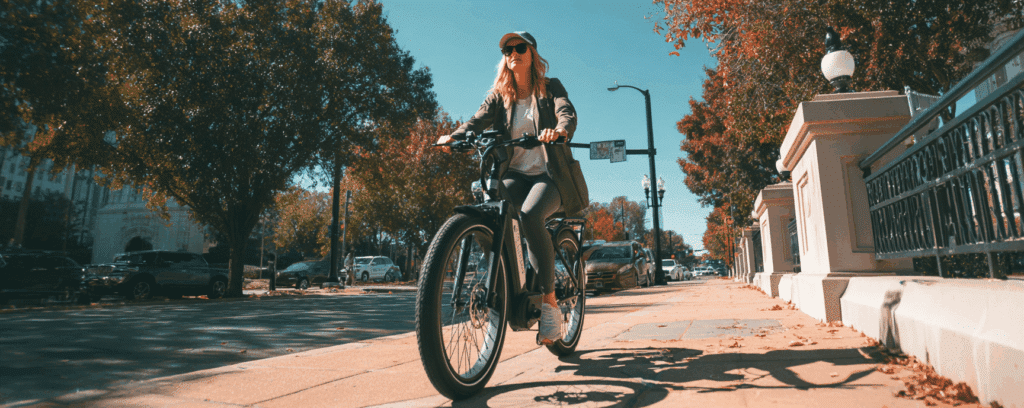
Understanding Oklahoma’s e-bike sidewalk law and liability is essential for safe riding. Learn state regulations, local ordinances, insurance coverage, and your legal rights after an accident.
Electric bikes have transformed how Oklahomans commute, exercise, and explore their communities. However, with this growing popularity comes important questions about where you can legally ride and who’s responsible when accidents happen. If you’re an e-bike owner or considering purchasing one, knowing the legal landscape can protect you from citations, accidents, and financial liability.
Understanding E-Bike Classifications in Oklahoma
Oklahoma law divides electric bicycles into three distinct classes, each with different regulations:
Class 1 E-Bikes feature a motor that assists only when you’re pedaling and stops providing assistance once you reach 20 mph. These bikes are the most widely accepted across different riding areas.
Class 2 E-Bikes include a throttle that can propel the bike without pedaling, but the motor still cuts off at 20 mph. Think of these as having a “boost” button that works even when you’re not actively pedaling.
Class 3 E-Bikes provide pedal assistance up to 28 mph and may include a speedometer. These faster models face more restrictions on where they can be ridden.
All three classes must have motors rated at 750 watts or less. Anything more powerful is typically considered a motor vehicle under Oklahoma law, which means different licensing, registration, and insurance requirements apply.

 539-295-4225
E-Bike Accident Lawyer
Contact us today for your free & confidential case review. Our team will help you get the compensation that you deserve.
What Are the E-Bike Laws in Oklahoma?
Oklahoma adopted e-bike legislation that brought clarity to where and how these vehicles can be used. At the state level, e-bikes are generally treated similarly to traditional bicycles, but with some key differences.
You don’t need a driver’s license, registration, or insurance to operate an e-bike in Oklahoma. Riders must be at least 16 years old, though younger riders can operate them under adult supervision on private property.
E-bikes must have working brakes and proper lighting when used at night. Your front light must be visible from at least 500 feet away, and rear reflectors or lights must be visible from 300 feet. These aren’t just suggestions; they’re legal requirements that affect liability if you’re involved in an accident.
When riding on streets, e-bike operators have the same rights and responsibilities as traditional cyclists. This means following traffic signals, using hand signals for turns, and yielding to pedestrians. You’re required to ride as far right as practicable, except when passing, preparing for a left turn, or when the lane is too narrow to share safely with a motor vehicle.
Is It Legal to Ride a Bike on the Sidewalk in Oklahoma?
The answer depends on where you are. Oklahoma state law doesn’t explicitly prohibit riding bicycles or e-bikes on sidewalks, which means the decision falls to individual cities and towns.
Many Oklahoma municipalities have created their own sidewalk riding ordinances. In Oklahoma City, for example, riding on sidewalks in business districts is generally prohibited. Tulsa has similar restrictions in downtown areas. These local rules exist because sidewalks in busy commercial zones see heavy pedestrian traffic, and the speed differential between bikes and walkers creates collision risks.
Even where sidewalk riding is permitted, riders must yield to pedestrians and give an audible signal when passing. You’re expected to travel at a safe speed that allows you to stop quickly if needed. If you’re riding faster than a walking pace on a sidewalk, you could be found negligent if an accident occurs.
Class 3 e-bikes face additional restrictions in many communities. Some cities prohibit these faster models from sidewalks entirely, while others ban them from multi-use paths or trails. Before riding your Class 3 e-bike anywhere other than the street, check your local ordinances.
The safest approach is to contact your city’s planning or transportation department to verify local rules. What’s legal in one Oklahoma town might result in a citation in the next community over.
Who’s Liable When E-Bike Accidents Happen?
 Liability in e-bike accidents depends on several factors: who violated traffic laws, who acted negligently, and where the accident occurred. These cases can become complicated quickly because they may involve pedestrians, motorists, property owners, or even municipalities.
If you collide with a pedestrian while riding on a sidewalk where it’s prohibited, you’ll likely be found at fault. The same applies if you were riding at an unsafe speed, failed to yield, or didn’t provide adequate warning when passing. Your violation of traffic ordinances creates a presumption of negligence that can be difficult to overcome.
When motorists cause e-bike accidents, the driver may be liable for your injuries and property damage. Common scenarios include drivers failing to check blind spots, opening car doors into bike lanes, or making right turns without yielding. Oklahoma follows a modified comparative negligence system, which means you can recover damages as long as you’re less than 50% at fault. However, your compensation will be reduced by your percentage of fault.
Property owners can also face liability if hazardous sidewalk conditions cause your accident. Broken concrete, unmarked obstacles, or poor maintenance might create premises liability claims. However, you’ll need to prove the property owner knew or should have known about the dangerous condition and failed to fix it or warn about it.
Contact us today for your free & confidential case review. Our team will help you get the compensation that you deserve.
Are E-Bikes Covered Under Homeowners Insurance?
This question surprises many e-bike owners who assume their bike is automatically protected. The answer is usually yes, but with important limitations you should understand.
Most homeowners’ insurance policies include personal property coverage that extends to bicycles and e-bikes, even when you’re away from home. If your e-bike is stolen from your garage, workplace, or while locked up downtown, your homeowners’ policy typically covers the loss up to your policy limits.
However, there’s often a sublimit for certain categories of property, including bicycles. Many policies cap bicycle coverage at $1,000 to $2,000, which may not fully replace a quality e-bike that can cost $2,000 to $5,000 or more. You can usually purchase additional coverage through a personal articles floater or scheduled property endorsement that provides higher limits and sometimes even covers accidental damage.
The liability portion of your homeowners policy is equally important. If you cause an accident while riding your e-bike and injure someone or damage their property, your homeowners’ liability coverage typically responds to these claims. This protection applies whether you’re riding in your neighborhood or across the state.
That said, standard homeowners’ policies may exclude certain motorized vehicles from liability coverage. Most insurers treat Class 1 and Class 2 e-bikes as bicycles, but some might view Class 3 models differently because of their higher speeds. Review your policy carefully or speak with your insurance agent to verify coverage, especially if you own a Class 3 e-bike.
Some riders choose to add an umbrella policy that provides an additional layer of liability protection beyond their homeowners policy limits. This extra coverage can be valuable if you’re involved in a serious accident resulting in substantial injuries or property damage.
Local Variations: City-Specific E-Bike Rules
Oklahoma’s larger cities have developed their own approaches to e-bike regulation, creating a patchwork of local ordinances.
Oklahoma City allows e-bikes on most streets and designated bike paths. The city has been expanding its bicycle infrastructure, including protected bike lanes that e-bikes can use. Sidewalk riding restrictions apply primarily in downtown business districts.
Tulsa permits Class 1 and Class 2 e-bikes on multi-use trails within the city’s extensive trail system. Class 3 e-bikes are allowed on trails only if the rider keeps speeds at or below 20 mph. The city prohibits all e-bikes from certain pedestrian-only areas.
Norman treats e-bikes similarly to traditional bicycles on most of its trails and bike lanes. However, specific parks and recreation areas may have their own rules posted at trailheads.
Smaller communities throughout Oklahoma may have minimal regulations or may not have addressed e-bikes specifically in their municipal codes. When local laws are silent, state law generally governs.
What to Do After an E-Bike Accident
If you’re involved in an accident while riding your e-bike, taking the right steps immediately can protect your health and your legal rights.
First, check yourself and others for injuries. Call 911 if anyone is hurt, even if injuries seem minor. Some injuries don’t manifest symptoms immediately, and having a police report creates an official record of the incident.
Exchange information with anyone else involved, including names, contact details, insurance information, and vehicle details if a car was involved. Take photos of the accident scene, your e-bike, any vehicles involved, visible injuries, and relevant traffic signs or signals.
Get contact information from witnesses. Their independent accounts can be valuable if there’s a dispute about what happened.
Seek medical attention even if you feel fine. Adrenaline can mask pain and injury symptoms. Documentation of your injuries and treatment is important if you later file a claim.
Report the accident to your insurance company. This applies whether you’re filing a claim under your homeowners policy for property damage or notifying them of a potential liability claim from another party.
Preserve evidence by not repairing your e-bike until it’s been photographed and documented. Keep all medical bills, receipts, and records related to the accident.
Contact us today for your free & confidential case review. Our team will help you get the compensation that you deserve.
When Legal Help Makes a Difference
 Some e-bike accidents result in minor property damage or injuries that resolve quickly. Others lead to serious injuries, disputed liability, or inadequate insurance settlements. Knowing when to contact an attorney can make a significant difference in your recovery.
You should consider legal representation if you’ve suffered significant injuries requiring extensive medical treatment, surgery, or long-term care. An experienced attorney can help you understand the full value of your claim, including future medical costs, lost wages, and pain and suffering that you might not recognize on your own.
When insurance companies dispute fault or offer settlements that don’t cover your losses, an attorney can negotiate on your behalf or take your case to court if needed. Insurance adjusters work for the insurance company, not for you, and their first settlement offer is often much lower than what your claim is worth.
Complex cases involving multiple parties, severe injuries, or disputed facts benefit from legal experience. An attorney can investigate the accident, gather evidence, consult with experts, and build a strong case for your recovery.
At Edwards & Patterson Law, we understand Oklahoma traffic laws and how they apply to e-bike accidents. We’ve helped injured Oklahomans recover compensation for medical bills, lost income, property damage, and the physical and emotional impact of their injuries. We work on a contingency fee basis, which means you don’t pay attorney fees unless we recover compensation for you.
Riding Safely and Legally
Understanding Oklahoma’s e-bike sidewalk law and liability helps you make informed decisions about where and how to ride. Know your local ordinances, follow traffic rules, wear a helmet even though it’s not legally required for adults, and ride defensively.
E-bikes offer an environmentally friendly, economical way to get around, but they also come with legal responsibilities. Whether you’re commuting to work, running errands, or enjoying Oklahoma’s trails, knowing the rules protects you and those around you.
If you’ve been injured in an e-bike accident or have questions about your rights, contact Edwards & Patterson Law for a free consultation. We’ll review your case, explain your options, and help you understand what compensation you may be entitled to receive.
Last updated Tuesday, September 22nd, 2026